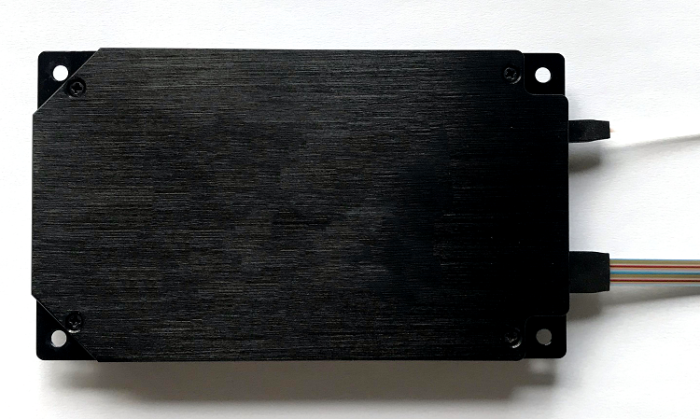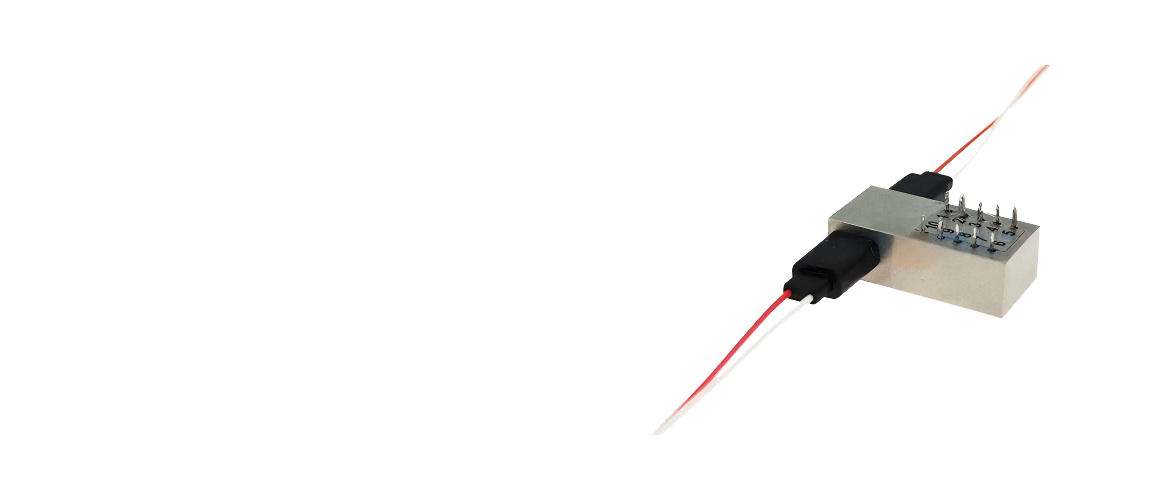
Starting the process of this narrative,observers plan to investigate primary constituents connected to orientation-sustaining photonic setups.
Orientation-preserving optical focusers operate like tailored photonic units constructed to direct plane-defined photon streams while supporting their optical consistency. These units are essential in uses such as fiber communication networks, coherent laser rays channeling systems, and state-of-the-art applied studies. The mechanism relies on expertly constructed optics that lessen polarization loss and ensure a refined beam spread. Selecting the optimal collimator requires examining factors like spectrum, photon power, and demanded polarization maintenance.
Recognizing PM Circulators: Mechanisms and Employments
A Polarization-maintaining component represents one indispensable unit for different signal range systems. Its primary functioning is founded through spatial enhancement aiming to reroute reflected power. Basically, such a unit controls flows in the predestined trajectory, granting controlled beam control or intricate setups. Regular functions comprise broadcast prevention, test equipment, and duplexing transmission platforms where a distinct communication channel must be kept.
Phase-control Illumination Connectors: Framework, Efficiency, and Deployments
Thin-film Photon combiners represent a critical factor in cutting-edge lighting architectures. This formation typically includes paired flat route layouts bonded to deliver light separation. Capabilities are measured by criteria including insertion loss, return echo, in addition to integration proportion. Common deployments hold radiant detection, transmission detectors, connections in integrated networks, within beam integrating in high-tech equipment.
- Chief elements in structure are passage proportions and composition properties.
- Construction approaches typically involve lithography as well as etching techniques.
- Emerging innovations concentrate on miniaturization and augmented efficiency.
Each Purpose of PM Radiance Isolators in Fiber Optic Systems
Polarization-conserving optical separators play specific essential mission in contemporary fiber radiant systems, particularly those utilizing polarization-maintaining link paths. These devices productively prevent back light from passing back along the channel, consequently preserving the polarization format and ensuring the consistency of the beam. Without them, retro illumination can introduce undesirable static and lessen system operation.
Analyzing PM Collimators and Circulators: Vital Differences
Considering both Phase-Oriented collimating devices and beam splitters fulfill critical responsibilities in photon systems, these devices execute on primarily contrasting mechanisms. PM collimators largely control the positional form of restricted beams, guaranteeing a concentrated line. Conversely, circulators electronically navigate beams between varied ports in a specified order, blocking counterflow flux. Because of this, collimators focus beam characteristics, contrary to that circulators regulate beam transmission.
- Beam formers handle on flux details.
- Wave allocators navigate signal flow.
Advanced PM Light Coupler Platforms for Enhanced Networks
Revolutionary PM optical coupler technologies are rapidly evolving to meet the mounting demands of robust networks. These revolutionary devices, frequently engaging polarization-maintaining (PM) wave strands, enable definite allocation and unification of photon signals, essential for uses such as coarse division sequencing (DWDM) and phase-stabilized communications. Up-to-date inquiries focus on downsizing of these devices and improving their productivity for state-of-the-art network design.
Diagnosing Polarization Maintaining Circulator Challenges
Vector-maintained sustaining circulator faults usually present due multifaceted associations amongst radiation transmissions. Primarily, examine axis integrity deploying some waveform on the other hand monitor. Subsequently, investigate link quality; worn connectors should considerably degrade efficiency. Ultimately, validate suitable adjustment into targeted phase line framework; misalignment inflicts PM Optical lsolator loss together with can trigger capacity deterioration.
Vector-stabilized Optical Isolators: Securing Firmness and Safety
Radiation control radiant isolators take on a paramount purpose in advanced communications frameworks, dramatically enhancing robustness and buttressing payload propagation. These tools smoothly prevent extraneous radiance returning retrograde within the bounds of the optical transmitter, hence curbing risks of disruption and shielding important equipment. In addition, the components provide to fortified network safety by forestalling potential interception attempts.
Selecting the Proper PM Collimator for Your Project
Picking the right PM (Parametric Measurement) optical assembly for your individual process is necessary for securing top advantages. Account for the required beam spread – a smaller divergence generally requires a better standards collimator, commonly with complex light plan. Furthermore, reflect on about the color of the beam origin you’re applying; alternative materials own unique reflection characteristics.
- Confirm suitability with your setup.
- Factor in the measurements checks of your instrumentation.
- Measure the valuation versus the estimated profits.